
Knee Replacement
Our Expertise
Shoulder Injuries
Recurrent Shoulder dislocation
Rotator Cuff Tear
Injuries around Shoulder
Slap Tears
Knee Injuries
ACL Injury
PCL Injury
Meniscus Injury
MPFL/MCL/LCL Injury
Cartilage Injury
Sport Injuries
ATFL Tear
Tennis Elbow
Golfer Elbow
Hip Labrel Tear
Treatment and Procedures
Shoulder Arthroscopy
Shoulder Replacement
Knee Arthroscopy
Knee Replacement
What Happens During Knee Replacement Surgery
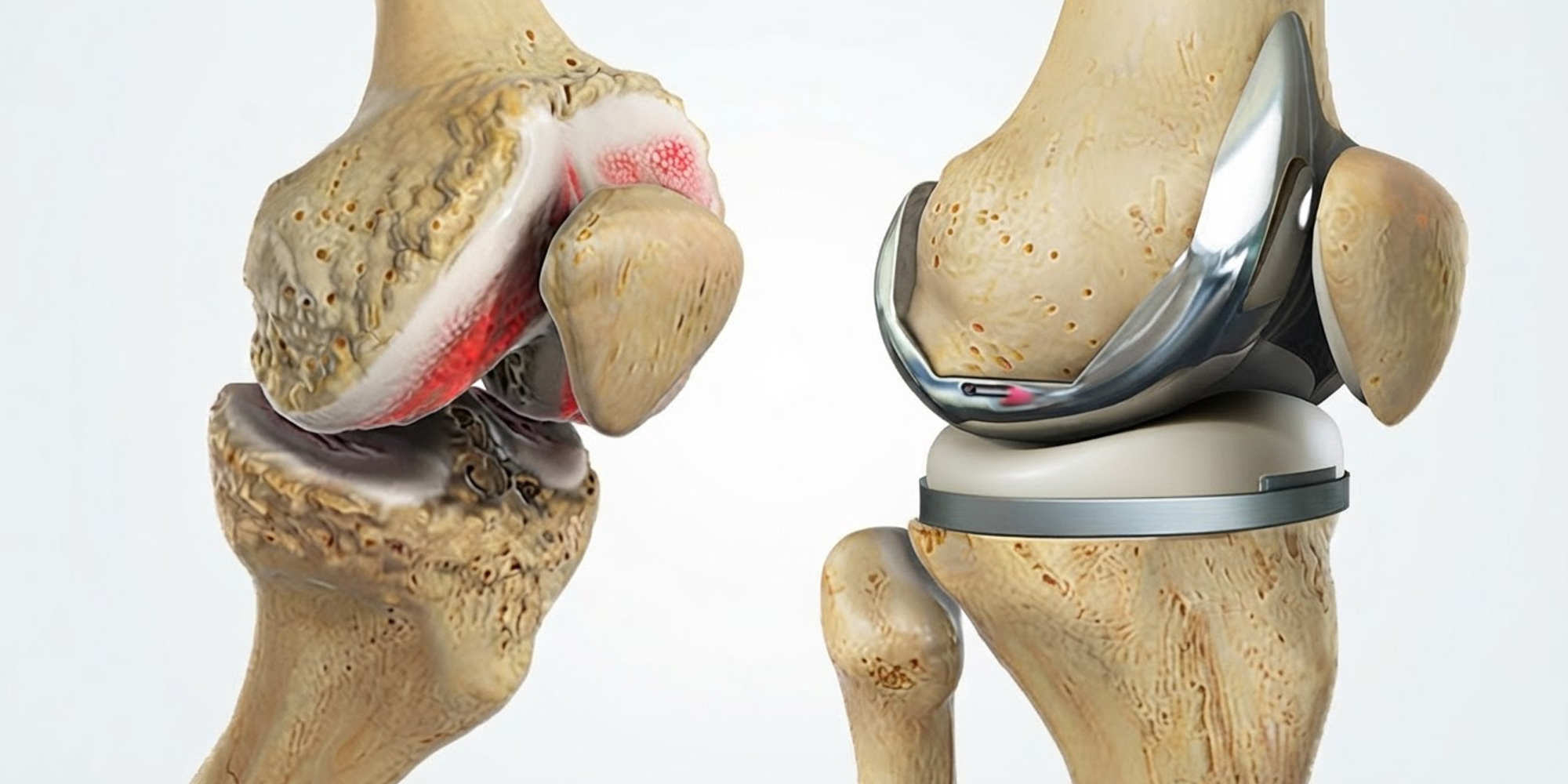
Knee replacement surgery removes the damaged surfaces of a worn or arthritic knee joint and replaces them with precisely fitted implants that restore smooth, pain-free movement. It’s one of the most reliably successful procedures in orthopaedics — but it works best when the timing is right, the diagnosis is accurate, and the surgical and rehabilitation plan is built around the individual. Dr. Abhishek Saxena performs both partial and total knee replacement at Shalby Multi-Specialty Hospital, Vaishali Nagar, with a focus on restoring meaningful function, not just a number on a post-operative X-ray.
When Is Knee Replacement the Right Option?
Knee replacement is typically considered when knee pain and stiffness from joint damage are significantly limiting daily life — walking, climbing stairs, getting up from a chair — and when a genuine trial of non-surgical treatment hasn’t provided enough relief. The most common reasons patients reach this point include:
Knee osteoarthritis — progressive wearing away of the joint cartilage, leaving bone rubbing on bone, usually in patients over 50 but increasingly in younger active adults with prior joint injuries
Rheumatoid arthritis — inflammatory joint disease that damages cartilage and the joint lining over time
Post-traumatic arthritis — arthritis developing years after a knee fracture, ligament injury, or meniscus damage that altered the joint’s mechanics
Avascular necrosis — bone death from loss of blood supply, which can rapidly destroy the knee joint surface
Surgery is not the first step. Dr. Saxena’s evaluation always establishes whether weight management, physiotherapy, activity modification, anti-inflammatory medication, or injections could provide adequate relief before recommending a replacement.
Partial or Total Replacement — What’s the Difference?
Total knee replacement (TKR)
The damaged surfaces of the entire knee joint — the end of the thighbone (femur), the top of the shinbone (tibia), and the back of the kneecap (patella) — are resurfaced with metal and plastic implants. Total replacement is recommended when arthritis affects most or all of the knee.
Partial knee replacement (PKR)
When arthritis is confined to one compartment of the knee — most commonly the inner (medial) side — only that section is resurfaced, preserving the healthy bone and cartilage elsewhere. Partial replacement involves a smaller incision, less blood loss, and a faster recovery than total replacement, with many patients returning home the same day or the day after surgery. Not every patient is a candidate, which is why careful imaging and examination matter.
What Happens During Knee Replacement Surgery
The procedure is performed under spinal or general anaesthesia. An incision is made over the front of the knee to access the joint. The damaged cartilage and a small amount of underlying bone are carefully removed from the joint surfaces, and the implants — a metal femoral component, a plastic tibial spacer, and where needed a plastic patellar button — are precisely fitted and secured. The joint is then tested through its full range of motion before closure. Most knee replacements take between 60 and 90 minutes. Surgery is performed at Shalby Multi-Specialty Hospital, Vaishali Nagar, with full anaesthetic, intensive care, and post-operative monitoring support.
Recovery After Knee Replacement
Recovery is where most of the work happens, and it’s as important as the surgery itself. Most patients begin walking with support within 24 hours of surgery — early movement is encouraged because it reduces the risk of stiffness and blood clots. A structured physiotherapy programme starts in hospital and continues at home or in an outpatient clinic, progressively restoring range of motion, muscle strength, and confidence on the knee.
Most patients return to daily activities — walking independently, managing stairs, driving — within 4 to 6 weeks. Full recovery, where the knee feels natural and comfortable through all normal activities, typically takes 3 to 6 months. High-impact activities like running or jumping are generally discouraged long-term to protect the implant, but walking, swimming, cycling, and recreational sport are all realistic goals.
Why Patients Choose Dr. Saxena for Knee Replacement
Fellowship-trained in both knee arthroscopy and joint replacement — meaning the full range of knee treatments, from ligament repair to replacement, is available from one surgeon who knows where each option fits
Conservative first — surgery is recommended only when the evidence supports it; patients are never pushed toward replacement prematurely
Partial replacement experience — PKR is technically more demanding than total replacement; not every surgeon offers it, and its suitability is assessed carefully where the clinical picture supports it
Personal continuity — the same surgeon at every consultation, in surgery, and at every follow-up, not a different face at each visit
Hospital-grade surgical care — procedures performed at Shalby Multi-Specialty Hospital, Vaishali Nagar, with full anaesthetic and post-operative infrastructure
FAQ
How long does a knee replacement last?
Modern knee implants are designed to last 15 to 20 years or more in most patients. Longevity depends on the patient’s weight, activity level, and how well the rehabilitation programme is followed in the months after surgery.
Is knee replacement painful?
Post-operative pain is managed with a structured pain protocol — most patients describe the recovery as uncomfortable rather than severely painful, and pain typically reduces steadily week by week as the knee settles and strengthens.
What is the right age for knee replacement?
There’s no fixed age — the decision is based on the degree of joint damage, the level of functional limitation, and how much non-surgical treatment has already been tried. Replacing a knee too early in a very young patient carries the risk of needing a revision surgery later; waiting too long can make recovery harder. Dr. Saxena’s evaluation weighs all these factors individually.
Can both knees be replaced at the same time?
Bilateral simultaneous knee replacement is possible in selected patients, but carries higher anaesthetic and recovery demands. Most patients have one knee done at a time, with the second planned once the first has recovered adequately.
Ready to Stop Living Around Your Knee Pain?
If knee pain is limiting your daily life and other treatments haven’t provided lasting relief, a consultation is the right next step — not a commitment to surgery, just an honest evaluation of all your options.