
Tennis Elbow
Our Expertise
Shoulder Injuries
Recurrent Shoulder dislocation
Rotator Cuff Tear
Injuries around Shoulder
Slap Tears
Knee Injuries
ACL Injury
PCL Injury
Meniscus Injury
MPFL/MCL/LCL Injury
Cartilage Injury
Sport Injuries
ATFL Tear
Tennis Elbow
Golfer Elbow
Hip Labrel Tear
Treatment and Procedures
Shoulder Arthroscopy
Shoulder Replacement
Knee Arthroscopy
Knee Replacement
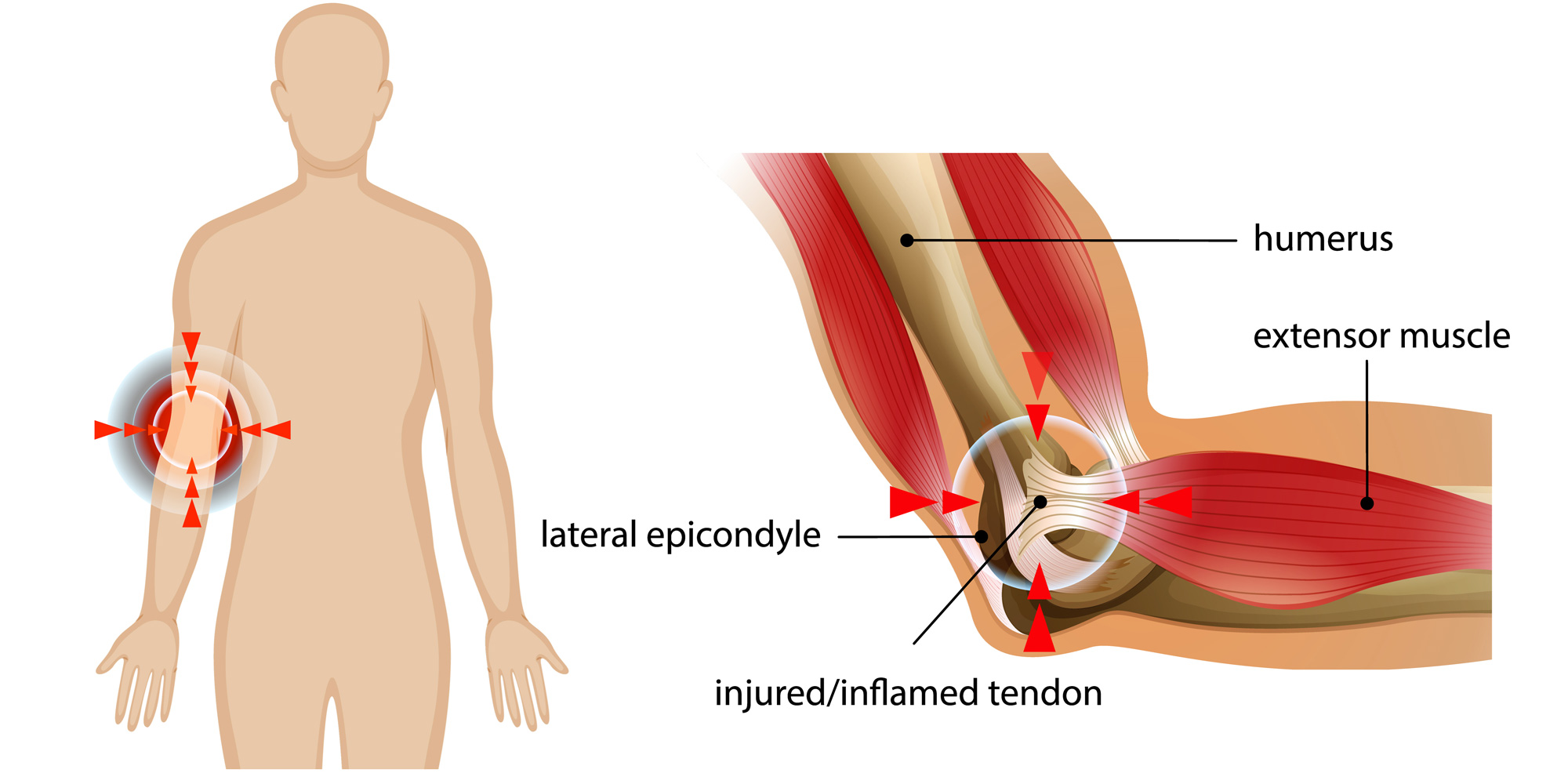
You don’t have to play a single set of tennis to get tennis elbow. It’s one of the most misleadingly named conditions in sports medicine — in reality, it affects painters, plumbers, cooks, weightlifters, office workers who type all day, and yes, tennis and badminton players too. What they all have in common is repetitive use of the wrist and forearm, which over time overloads the tendons on the outer side of the elbow.
Medically known as lateral epicondylitis, tennis elbow is a painful overuse injury of the tendons that attach your forearm muscles to the bony bump on the outside of your elbow (the lateral epicondyle). These tendons are responsible for extending your wrist and fingers — meaning every time you grip a racquet, lift a bag, shake a hand, or even turn a doorknob, they’re put to work. Repeated micro-strain on these tendons, without adequate recovery, leads to small tears and degenerative changes at the tendon origin — and that’s where the pain comes from.
Left untreated, tennis elbow can turn something as simple as lifting a cup of tea or opening a jar into a painful, frustrating task. The good news: it’s highly treatable, and most patients recover fully without ever needing surgery.
What Causes Tennis Elbow?
Tennis elbow develops from repetitive strain, not a single injury. Common contributing activities include:
- Racquet sports — tennis, badminton, squash — especially with poor backhand technique or an improperly strung/gripped racquet
- Repetitive gripping or lifting tasks — carpentry, painting, plumbing, cooking
Weightlifting, particularly exercises that load the wrist extensors repeatedly - Prolonged computer use, especially with poor wrist positioning while typing or using a mouse
- Sudden increases in training intensity or volume without adequate conditioning
Age is also a factor — tennis elbow is most common between the ages of 30 and 50, when tendons have started to lose some of their natural elasticity and resilience but are still under everyday physical demand.
Recognizing the Symptoms
Tennis elbow tends to develop gradually rather than appear overnight. Watch for:
- Pain or burning on the outer part of the elbow, sometimes radiating down the forearm
- Tenderness when pressing on the bony bump on the outside of the elbow
Weak grip strength — struggling to hold a cup, shake hands, or turn a key - Pain that worsens with wrist extension, gripping, or lifting with the palm facing down
- Stiffness in the elbow, especially first thing in the morning
- Symptoms that build up over days or weeks of a repetitive activity, rather than starting with a sudden injury
Because the onset is gradual, many people push through the early discomfort — which often allows the underlying tendon damage to worsen before they seek treatment.
How We Diagnose Tennis Elbow
Diagnosis usually starts with a focused clinical examination: assessing tenderness over the lateral epicondyle, testing grip strength, and reproducing your pain with specific resisted wrist and finger movements. In most cases, this hands-on exam is enough to confirm the diagnosis.
Where the picture is less clear-cut, or if symptoms have persisted despite treatment, imaging can help. An ultrasound provides a real-time look at the tendon and can identify the location and extent of degeneration or tearing, while an MRI offers a more detailed view when a more complex injury or an alternate diagnosis needs to be ruled out.
Getting an accurate diagnosis matters because several other conditions — nerve entrapment, elbow arthritis, or referred pain from the neck — can mimic tennis elbow symptoms, and treating the wrong problem only delays real recovery.
Treatment Options
Bracing and Supports
A counterforce brace, worn just below the elbow, can reduce strain on the tendon during daily activities and is a simple, effective way to manage symptoms while healing progresses.
Physiotherapy
A structured physiotherapy program is the cornerstone of tennis elbow treatment. This typically includes stretching to improve flexibility, and — critically — eccentric strengthening exercises, which have strong evidence for stimulating tendon healing and remodeling. Physiotherapy also addresses grip technique and forearm mechanics to reduce the chance of recurrence.
Rest and Activity Modification
The first step is reducing the repetitive load that caused the problem in the first place — not necessarily stopping activity altogether, but adjusting technique, equipment (like racquet grip size or string tension), or workload to give the tendon room to heal.
Injections
For pain that doesn’t settle with conservative measures, targeted injections — including corticosteroid injections for short-term relief, or regenerative options like platelet-rich plasma (PRP) — can help calm inflammation and support the tendon’s healing response.
Minimally Invasive Surgery
When symptoms persist beyond six to twelve months despite thorough non-surgical treatment, a minimally invasive procedure to debride the damaged tendon tissue and stimulate healing may be recommended. This is reserved for a small percentage of patients — the vast majority of tennis elbow cases improve without ever needing surgery.
Recovery and Getting Back to Your Activity
Recovery timelines vary depending on severity and how early treatment starts. Mild cases often improve within a few weeks of rest, bracing, and physiotherapy. More established cases can take two to three months of consistent rehabilitation to fully resolve. The key to lasting recovery isn’t just resolving the pain — it’s correcting the underlying technique, load, or ergonomic factors that caused the strain, so the problem doesn’t return the moment you go back to your sport or work.
Why Choose Dr. Abhishek Saxena for Tennis Elbow
- Personalized care built around your specific activity, whether that’s sport, work, or daily life
- Advanced diagnostic tools, including ultrasound and MRI, to accurately assess tendon damage
- A conservative-first philosophy, with surgery reserved only for cases that genuinely need it
- Guided rehabilitation designed to treat the cause, not just the symptom, reducing the risk of recurrence
Tennis Elbow Rarely Fixes Itself With Time Alone
Pushing through elbow pain doesn’t give the tendon a chance to heal — it usually just adds more micro-damage on top of what’s already there, turning a manageable strain into a stubborn, months-long problem. The earlier you address it, the shorter and simpler your recovery is likely to be.