
Shoulder Replacement
Our Expertise
Shoulder Injuries
Recurrent Shoulder dislocation
Rotator Cuff Tear
Injuries around Shoulder
Slap Tears
Knee Injuries
ACL Injury
PCL Injury
Meniscus Injury
MPFL/MCL/LCL Injury
Cartilage Injury
Sport Injuries
ATFL Tear
Tennis Elbow
Golfer Elbow
Hip Labrel Tear
Treatment and Procedures
Shoulder Arthroscopy
Shoulder Replacement
Knee Arthroscopy
Knee Replacement
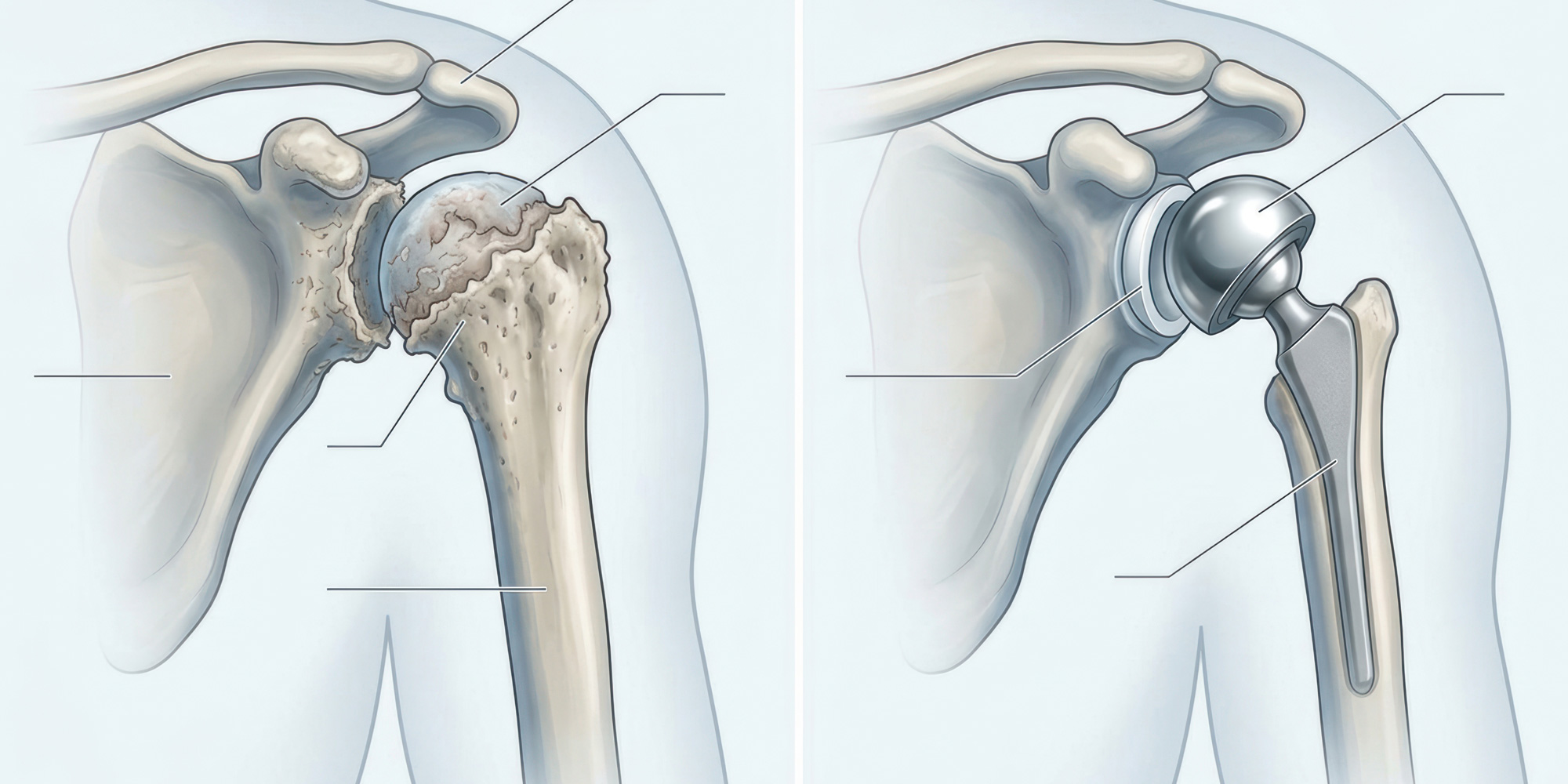
Shoulder replacement is one of the most effective procedures in orthopaedics for the right patient at the right time. When arthritis, severe fracture, or advanced joint damage has destroyed the shoulder’s surfaces beyond the point where physiotherapy or arthroscopic surgery can help, replacing the damaged components with precision-engineered prosthetics reliably reduces pain and restores function. Dr. Abhishek Saxena performs shoulder replacement at Shalby Multi-Specialty Hospital, Vaishali Nagar, with prosthetic selection and surgical technique matched to each patient’s specific joint damage, activity level, and anatomy — not a single-type-fits-all approach.
When Is Shoulder Replacement Recommended
Shoulder replacement is typically considered when joint damage is severe enough that the pain and loss of function can no longer be adequately managed by non-surgical means or less invasive procedures. The most common reasons include:
Osteoarthritis — gradual wear of the cartilage that cushions the shoulder joint, leaving bone rubbing on bone, causing persistent deep pain, stiffness, and loss of range of motion that no longer responds to physiotherapy or injections
Rheumatoid arthritis — inflammatory joint disease that can damage the shoulder’s cartilage and bone over time, sometimes affecting both shoulders
Severe rotator cuff tear arthropathy — when a long-standing, massive rotator cuff tear has allowed the shoulder joint to deteriorate to the point where the joint surfaces themselves are damaged
Complex fracture — certain fracture patterns of the shoulder in older patients are better treated with replacement than reconstruction, particularly when the blood supply to the bone has been compromised
Failed previous shoulder surgery — in some cases, a prior repair or replacement requires revision when it has worn out or not functioned as expected
Choosing the Right Type of Replacement
Not all shoulder replacements are the same. Dr. Saxena’s evaluation determines which type matches your specific anatomy and pathology:
Total Shoulder Replacement (Anatomic)
The damaged ball (head of the humerus) is replaced with a metal component, and the socket (glenoid) is resurfaced with a smooth plastic cup — replicating the shoulder’s natural anatomy. Best suited to patients with intact rotator cuff function and primary osteoarthritis.
Reverse Total Shoulder Replacement
In a reverse replacement, the ball and socket positions are switched — the metal ball is fixed to the shoulder blade side and the plastic socket to the arm bone. This design allows the deltoid muscle to power the shoulder even when the rotator cuff is severely damaged or absent. It is the preferred option for rotator cuff tear arthropathy and complex fractures in older patients, and has become the most commonly performed type of shoulder replacement globally.
Hemiarthroplasty (Partial Replacement)
Only the ball component is replaced, leaving the natural socket intact. Used selectively for certain fracture types or when the socket surface is in good condition and doesn’t require replacement.
What the Surgery Involves
Shoulder replacement is performed under general anaesthesia at Shalby Multi-Specialty Hospital. Through a carefully placed incision at the front of the shoulder, the damaged bone and cartilage are precisely removed and the prosthetic components are implanted and secured. The exact technique — how the components are fixed, which muscles are released and repaired — varies by the type of replacement and the patient’s anatomy. Most procedures take between 1.5 and 2.5 hours and are followed by an initial inpatient stay for pain management and early physiotherapy.
Recovery After Shoulder Replacement
Recovery from shoulder replacement follows a clear, staged path — though timelines vary by the type of replacement, the patient’s age, and how actively they engage with rehabilitation:
- Weeks 1–4: The arm is supported in a sling. Gentle pendulum exercises begin within days. Pain management and swelling control are the primary focus.
- Weeks 4–8: The sling is progressively removed. Physiotherapy begins restoring passive range of motion — the therapist moves the arm — before active movement is introduced.
- Months 2–4: Active exercises rebuild strength and motion. Most patients reach comfortable daily function — dressing, eating, light reaching — within this window.
- Months 4–6+: Continued strengthening and gradual return to light activity. Return to sport or manual work depends on the type of replacement and the specific demands involved.
The majority of patients report significant pain reduction within the first few weeks, with function continuing to improve over 6 to 12 months.
FAQ
Is shoulder replacement a major surgery?
It is a significant procedure performed under general anaesthesia, but it is well-established with a strong track record of outcomes. Most patients are surprised by how quickly pain improves in the early post-operative weeks relative to what they were experiencing beforehand.
How long does a shoulder replacement last?
Modern shoulder replacements are designed to last 15 to 20 years in most patients. Longevity depends on the type of implant, activity level, and how well rehabilitation is followed.
Will I be able to lift my arm overhead after replacement?
For total and reverse shoulder replacement, many patients regain comfortable overhead reach over the course of rehabilitation, though the degree varies by the type of replacement and pre-operative shoulder condition. Dr. Saxena will give you realistic expectations based on your specific anatomy and surgery type before any decision is made.
Can both shoulders be replaced?
Yes, though staged separately — typically with several months between procedures to allow full recovery on the first side before operating on the second.
Find Out if Shoulder Replacement Is Right for You
Not every painful shoulder needs replacement — and not every damaged one can avoid it. A proper evaluation is the only way to know which category you’re in.