
ATFL Tear
Our Expertise
Shoulder Injuries
Recurrent Shoulder dislocation
Rotator Cuff Tear
Injuries around Shoulder
Slap Tears
Knee Injuries
ACL Injury
PCL Injury
Meniscus Injury
MPFL/MCL/LCL Injury
Cartilage Injury
Sport Injuries
ATFL Tear
Tennis Elbow
Golfer Elbow
Hip Labrel Tear
Treatment and Procedures
Shoulder Arthroscopy
Shoulder Replacement
Knee Arthroscopy
Knee Replacement
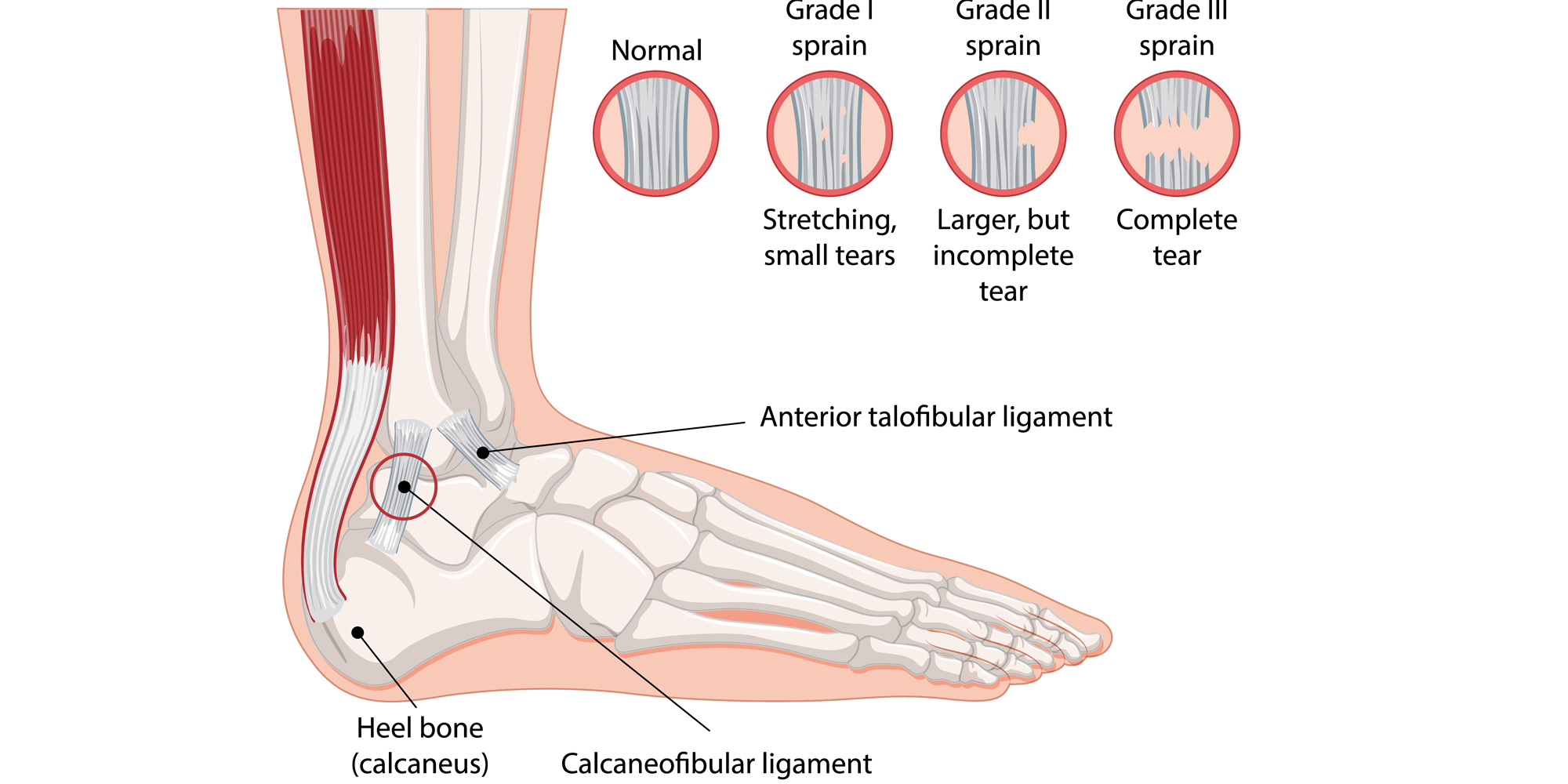
If you’ve ever landed awkwardly after a jump, twisted your foot while cutting direction on the field, or simply gone over on your ankle stepping off a curb, there’s a good chance the anterior talofibular ligament — the ATFL — took the hit. It’s the ligament most commonly injured in ankle sprains, responsible for stabilizing the outer side of the ankle and resisting excessive inward rolling of the foot.
Because ATFL injuries are so common, they’re often dismissed as “just a sprain” — iced, wrapped, and pushed through. But an ATFL tear that isn’t properly diagnosed and rehabilitated doesn’t always heal the way it should. Many athletes end up with a chronically unstable ankle that gives way again and again, long after the original injury seemed to have healed. Getting it right the first time matters.
What Causes an ATFL Tear?
The ATFL is stressed whenever the foot rolls inward and downward — a movement called inversion plantarflexion. This happens constantly in sport:
- Landing off-balance after a jump in basketball or volleyball
- Sudden direction changes in football, badminton, or tennis
- Stepping on an uneven surface, or on an opponent’s foot, during play
- A misstep on stairs or an uneven pavement during daily activity
Athletes in sports involving jumping, pivoting, and rapid changes of direction are particularly prone to this injury, and those who’ve had a previous ankle sprain are at significantly higher risk of tearing the ATFL again — which is exactly why incomplete rehabilitation after a “minor” sprain so often sets up a repeat injury.
Recognizing an ATFL Tear
Symptoms can range from mild to severe depending on whether the ligament is stretched, partially torn, or completely ruptured:
- Pain and tenderness on the outer side of the ankle, just in front of the bony bump (the lateral malleolus)
- Swelling and bruising that develops within hours of the injury
- Difficulty bearing weight on the affected foot
- A feeling of looseness or instability, especially on uneven ground
- A popping sensation at the time of injury, in more severe tears
- Recurrent “giving way” of the ankle during sport or daily activity, in cases of chronic instability
A single acute sprain is one thing — but if you find yourself rolling the same ankle repeatedly, months or years after the original injury, that’s a sign of chronic ATFL insufficiency, and it’s worth a proper evaluation rather than another round of rest and ice.
How Severe Is Your Injury? Understanding the Grades
ATFL injuries are typically classified by severity:
Grade III (complete tear)
The ligament is fully ruptured. Significant swelling, difficulty walking, and noticeable instability.
Grade II (partial tear)
The ligament is partially torn. Moderate pain, swelling, bruising, and some looseness in the joint.
Grade I (mild sprain)
The ligament is stretched but not torn. Mild pain and swelling, with minimal instability.
The grade of injury — along with whether it’s a first-time sprain or a recurrent one on an already-weakened ligament — plays a major role in deciding whether non-surgical treatment will be enough, or whether surgical reconstruction should be considered.
How We Diagnose an ATFL Tear
Diagnosis starts with a detailed clinical examination, including specific stress tests that assess how much the ankle joint shifts under gentle inward and forward pressure — a strong indicator of ligament laxity. Imaging plays an important supporting role:
- X-rays to rule out associated fractures, particularly important in more forceful injuries
- MRI scans to clearly visualize the extent of ligament damage, identify any partial versus complete tears, and check for associated injuries to cartilage or other ligaments in the ankle, which are common in more severe sprains
This combination allows Dr. Saxena to move past guesswork on “just a sprain” and build a treatment plan around exactly what’s damaged and how badly.
Treatment Options
Surgical Reconstruction
Surgery is generally reserved for complete (Grade III) tears in high-demand athletes, or for cases of chronic ankle instability where the ligament has healed in a stretched, ineffective position despite adequate rehabilitation. Using minimally invasive, often arthroscopy-assisted techniques, the damaged ligament is either repaired directly or reconstructed using nearby tissue, restoring the ankle’s natural stability.
Non-Surgical Management
The great majority of ATFL tears — including most Grade I and II injuries — heal well with a structured, non-surgical approach:
Rest, ice, compression, and elevation (RICE) in the acute phase to control swelling
Bracing or taping to protect the ankle while the ligament heals and to prevent re-injury during early return to activity
Progressive physiotherapy, focused not just on regaining range of motion, but specifically on proprioception and balance training — retraining the ankle’s sense of position so it can react quickly to uneven ground and prevent future rolls
Recovery and Getting Back to Sport
For non-surgical cases, most athletes progress from protected weight-bearing to full activity over four to eight weeks, depending on severity, with a gradual, criteria-based return to sport rather than a fixed timeline — the ankle needs to demonstrate strength, balance, and control before it’s cleared for cutting, jumping, or pivoting movements again. Surgical reconstruction typically requires a longer, staged rehabilitation protocol, often extending to three to four months before a full return to competitive sport.
Regardless of the treatment path, the single biggest factor in preventing another sprain is completing rehabilitation fully — not just until the pain goes away, but until balance, strength, and confidence in the joint are genuinely restored.
Why Choose Dr. Abhishek Saxena for Your ATFL Injury
- Accurate grading of ligament injury to avoid both under-treatment and unnecessary surgery
- Advanced diagnostic imaging to catch associated injuries that are easy to miss
- Minimally invasive surgical techniques when reconstruction is genuinely needed
- Rehabilitation protocols built specifically around returning safely to sport, not just walking pain-free
An Ankle That Keeps Rolling Won’t Fix Itself
Every sprain that’s rushed back from without proper rehabilitation leaves the ankle a little less stable than before — which is exactly how a single “minor” sprain turns into years of recurring injuries. If your ankle still feels loose, unstable, or gives way on uneven ground, that’s the time to get it properly assessed, not after the next rollover.