
MPFL / MCL / LCL Injury
Our Expertise
Shoulder Injuries
Recurrent Shoulder dislocation
Rotator Cuff Tear
Injuries around Shoulder
Slap Tears
Knee Injuries
ACL Injury
PCL Injury
Meniscus Injury
MPFL/MCL/LCL Injury
Cartilage Injury
Sport Injuries
ATFL Tear
Tennis Elbow
Golfer Elbow
Hip Labrel Tear
Treatment and Procedures
Shoulder Arthroscopy
Shoulder Replacement
Knee Arthroscopy
Knee Replacement
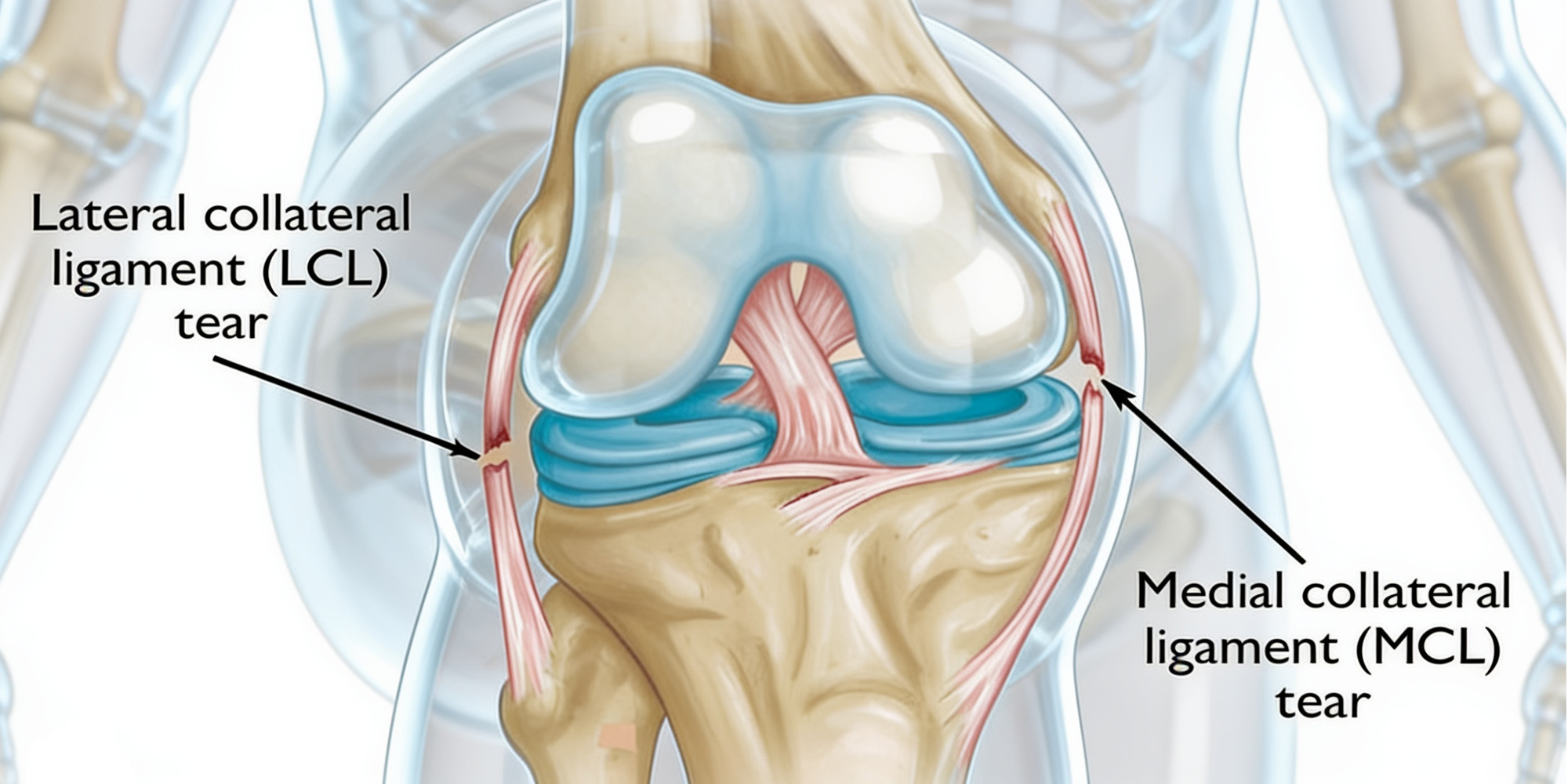
While the ACL and PCL control the knee’s front-to-back stability, an entirely different set of ligaments is responsible for keeping the joint steady from side to side — and keeping the kneecap tracking exactly where it should. Injuries to these structures are common, often underestimated, and can leave a knee feeling persistently unstable if not properly diagnosed and treated.
- The MCL (Medial Collateral Ligament) runs along the inner side of the knee, resisting forces that push the knee inward.
- The LCL (Lateral Collateral Ligament) runs along the outer side, resisting forces that push the knee outward.
- The MPFL (Medial Patellofemoral Ligament) is a smaller but critical ligament that holds the kneecap (patella) in its groove, preventing it from sliding or dislocating sideways.
Damage to any one of these — or a combination of them — usually comes from sudden twisting motions, awkward landings, direct impact during contact sports, or a kneecap that dislocates and pulls the MPFL with it. The result is pain, swelling, and a knee that no longer feels dependable during everyday movement, let alone sport.
How These Injuries Happen
- MCL injuries most often result from a direct blow to the outside of the knee — common in football, rugby, and other contact sports — which forces the knee inward and stretches or tears the ligament on the inner side. They can also occur from a sudden pivot or awkward landing.
- LCL injuries are less common but occur from the opposite mechanism: a force striking the inside of the knee and pushing it outward, or a non-contact twisting injury during pivoting sports.
- MPFL injuries almost always accompany a patellar (kneecap) dislocation — often during sports involving sudden changes in direction, such as basketball or badminton, or from a direct blow to the kneecap. Once the MPFL is torn, the kneecap is left far more vulnerable to dislocating again, which is why recurrent instability is such a common concern with this particular injury.
Recognizing the Symptoms
Symptoms vary depending on which ligament is involved and how severe the injury is, but generally include:
- Pain along the inner or outer side of the knee (MCL/LCL), or around and behind the kneecap (MPFL)
- Swelling that develops soon after the injury
- A feeling of looseness or instability, especially when changing direction or descending stairs
- Bruising along the affected side of the knee
- In MPFL injuries: a visible or felt “shift” of the kneecap at the time of injury, sometimes with the kneecap appearing to sit out of place before relocating on its own
- Difficulty trusting the knee to bear full weight confidently
Because these ligaments work together with the surrounding muscles and joint capsule to stabilize the knee, even a “mild” sprain can leave a lingering sense of instability if it isn’t properly rehabilitated — which is why persistent looseness after any twisting injury is worth having examined.
Grading the Severity
MCL and LCL injuries are generally classified into three grades:
Grade I (mild sprain)
Ligament fibers are stretched but not torn; the knee remains stable.
Grade II (partial tear)
A portion of the ligament is torn, with some looseness on stress testing but the joint remains largely stable.
Grade III (complete tear)
The ligament is fully torn, resulting in noticeable instability, particularly during side-to-side movement.
MPFL injuries are assessed differently — largely by whether the kneecap has dislocated once or repeatedly, and whether other structures (such as the underlying cartilage) were damaged during the dislocation event, since repeated episodes significantly raise the risk of long-term cartilage wear.
How We Diagnose the Injury
Diagnosis starts with a focused clinical examination, including specific stress tests that apply gentle sideways force to the knee to assess the integrity of the MCL and LCL, and specific tests to evaluate kneecap tracking and stability for suspected MPFL injuries. This is followed by MRI imaging where needed, which clearly shows the extent of ligament damage, confirms the grade of injury, and identifies any associated damage — such as cartilage injury from a patellar dislocation, or combined ligament and meniscus injuries that are common in higher-impact trauma.
Treatment Approach
Non-Surgical Management
The majority of Grade I and Grade II MCL and LCL sprains, and many first-time MPFL injuries without significant instability, heal well with non-surgical care:
- Bracing to protect the ligament and control side-to-side movement while it heals
- Physiotherapy focused on restoring range of motion, then progressively rebuilding strength in the muscles that support the knee
- Activity modification during the initial healing phase, followed by a gradual, structured return to sport
Surgical Reconstruction
Surgery becomes the recommended path in specific situations:
- Complete (Grade III) MCL or LCL tears, especially when combined with other ligament injuries such as the ACL
- Recurrent patellar dislocations, where the MPFL has been stretched or torn beyond the point of reliable healing, leaving the kneecap prone to dislocating again
- Persistent instability that hasn’t responded to a full course of conservative treatment
When surgery is needed, Dr. Saxena uses minimally invasive techniques wherever possible — repairing or reconstructing the damaged ligament to restore its natural stabilizing function, often using the patient’s own tissue for MPFL reconstruction to durably correct kneecap tracking.
Recovery and Rehabilitation
Recovery timelines depend on the ligament involved, the grade of injury, and whether treatment was surgical or non-surgical. Grade I sprains often improve within a few weeks with bracing and physiotherapy. Grade II injuries typically need four to six weeks of protected rehabilitation. Surgical reconstruction — particularly for MPFL — involves a longer, staged rehabilitation program, generally spanning several months before a full return to pivoting sports, with each phase focused on restoring strength, control, and confidence in the knee before progressing to the next.
Why Choose Dr. Abhishek Saxena for MPFL/MCL/LCL Injuries
- Accurate grading of ligament injuries to match treatment intensity to actual severity — avoiding both under- and over-treatment
- Advanced arthroscopic and reconstructive techniques for cases that need surgery
- Particular expertise in MPFL reconstruction for patients with recurrent kneecap instability
- A rehabilitation program built around restoring genuine confidence in the knee, not just healing the ligament
A Knee That Keeps Giving Way Won’t Fix Itself
Repeated knee instability can damage cartilage and increase the risk of long-term problems. Early diagnosis and proper treatment improve the chances of a stable, reliable knee.