
Meniscus Injury
Our Expertise
Shoulder Injuries
Recurrent Shoulder dislocation
Rotator Cuff Tear
Injuries around Shoulder
Slap Tears
Knee Injuries
ACL Injury
PCL Injury
Meniscus Injury
MPFL/MCL/LCL Injury
Cartilage Injury
Sport Injuries
ATFL Tear
Tennis Elbow
Golfer Elbow
Hip Labrel Tear
Treatment and Procedures
Shoulder Arthroscopy
Shoulder Replacement
Knee Arthroscopy
Knee Replacement
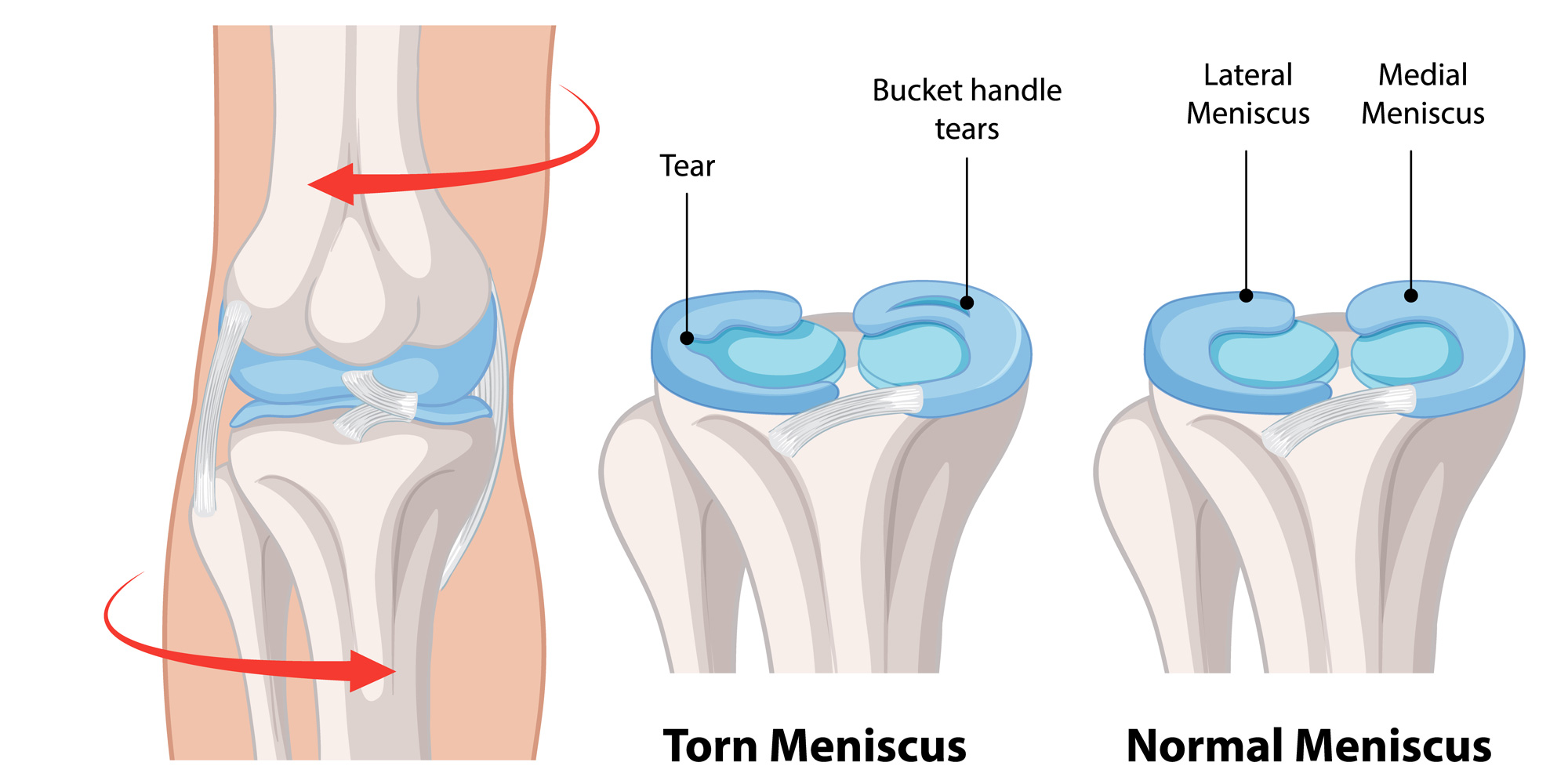
Tucked between your thighbone and shinbone are two crescent-shaped pads of cartilage called the menisci — one on the inner (medial) side of the knee and one on the outer (lateral) side. Together, they act as shock absorbers, distributing your body weight evenly across the joint, deepening the socket for stability, and protecting the smoother cartilage underneath from wear.
A meniscus tear happens when this cartilage is damaged — usually from a sudden twist while the foot is planted, a deep squat, or direct impact during sport. It’s one of the most common knee injuries seen in both athletes and the general population, and it can happen just as easily on a football field as it can while getting up from a low chair.
Not every meniscus tear behaves the same way. Some heal quietly with rest. Others cause persistent catching, locking, and instability that only resolve with surgery. Getting the right diagnosis — and understanding which kind of tear you have — is the key to choosing the right treatment.
What Causes a Meniscus Tear?
Acute (sudden) tears typically occur during sports that involve pivoting, cutting, or deep knee bending — football, badminton, cricket, and basketball are common culprits. A sudden twist of the knee while the foot stays fixed on the ground is a classic mechanism of injury. These tears are frequently seen alongside ACL injuries, since both structures are stressed during the same pivoting movements.
Degenerative tears develop gradually, often in people over 40, as the meniscus naturally weakens and becomes more brittle with age. In these cases, something as simple as standing up awkwardly or a minor twist can trigger a tear in cartilage that has already been thinning for years.
Recognizing the Symptoms
A meniscus tear doesn’t always announce itself with dramatic pain. Common signs include:
- A popping sensation at the moment of injury
- Swelling that develops over several hours (rather than immediately)
- Pain localized along the joint line, worse with twisting or squatting
- A sensation of the knee “catching” or “locking” during movement
- A feeling that the knee is unstable or about to give way
- Difficulty fully straightening or bending the knee
Some smaller tears cause only mild, intermittent discomfort and are sometimes ignored for weeks — which is exactly why persistent knee symptoms after any twisting injury deserve a proper evaluation, even if the pain seems manageable.
Why the Location of the Tear Matters
Not all parts of the meniscus are equal when it comes to healing potential. The outer third of the meniscus, known as the “red zone,” has a good blood supply and genuine capacity to heal after repair. The inner two-thirds, the “white zone,” has little to no blood supply, meaning tears here are far less likely to heal on their own — even with surgical repair — and are often better managed by trimming away the damaged fragment.
This is a central part of Dr. Saxena’s assessment: identifying not just that a tear exists, but exactly where it sits, what shape it takes (radial, horizontal, bucket-handle, or flap tear), and whether repair is a realistic option or whether the priority is preserving as much healthy meniscus tissue as possible.
How We Diagnose a Meniscus Tear
Diagnosis begins with a detailed conversation about how the injury happened and a hands-on clinical examination, including specific tests that stress the meniscus to reproduce your symptoms. This is followed, where needed, by an MRI scan — the gold standard for visualizing the size, location, and pattern of a meniscus tear, and for identifying any associated damage to ligaments or cartilage that might change the treatment plan.
An accurate diagnosis at this stage prevents two common mistakes: operating on a tear that would have healed on its own, or persisting with conservative treatment for a tear that genuinely needs surgical repair.
Treatment Options
Conservative (Non-Surgical) Management
Many smaller, stable tears — particularly those in the well-vascularized outer zone or in patients with mild symptoms — respond well to non-surgical care:
- Rest, ice, and activity modification to reduce inflammation in the early phase
- Structured physiotherapy to strengthen the muscles around the knee and improve joint stability, reducing stress on the healing meniscus
- Anti-inflammatory measures and, in select cases, injections to manage pain and swelling while the tissue settles
Arthroscopic Meniscus Repair
For tears located in the meniscus’s healing zone, or in younger, active patients, repair is strongly preferred over removal. Using arthroscopic (keyhole) techniques, the torn edges are stitched back together, preserving the meniscus’s natural shock-absorbing function and protecting the joint from long-term wear. Repair generally requires a longer, more protected rehabilitation period than trimming, but the payoff is a meniscus that continues to do its job for years to come.
Partial Meniscectomy
When a tear sits in the non-healing white zone, or the tissue is too damaged to repair, the damaged fragment is trimmed away arthroscopically, leaving as much healthy meniscus intact as possible. This relieves mechanical symptoms like catching and locking, with a quicker recovery than repair — though preserving tissue is always the priority whenever the biology of the tear allows it.
Recovery and Rehabilitation
Recovery timelines depend heavily on which treatment path is chosen. Partial meniscectomy patients are often walking comfortably within days and back to light activity within a few weeks. Meniscus repair requires a more gradual, protected rehabilitation protocol — often involving limited weight-bearing initially — to give the repaired tissue time to heal, typically extending over two to three months before a full return to sport.
At every stage, rehabilitation is built around restoring strength, flexibility, and proprioception (the joint’s sense of position and control) — not just healing the tear itself, but making sure the knee is genuinely ready to handle the demands you’ll place on it afterward.
Why Choose Dr. Abhishek Saxena for Your Meniscus Injury
- A repair-first philosophy that prioritizes preserving your natural meniscus wherever the biology allows
- Advanced arthroscopic techniques for precise, minimally invasive treatment
- Personalized diagnosis based on the specific tear pattern and location, not a one-size-fits-all protocol
- A rehabilitation program tailored to your treatment and your activity goals, whether that’s competitive sport or pain-free daily life
Don’t ignore a knee that catches, locks, or feels unstable. Book a consultation with Dr. Abhishek Saxena at Jaipur Sports Doc for an accurate diagnosis and a treatment plan built around your knee.
A Meniscus Tear Doesn’t Get Better by Waiting It Out
An untreated meniscus tear increases joint strain and can turn a repairable injury into one that requires trimming. If your knee is catching, locking, or feels unstable after a twist or fall, have it evaluated promptly.