
PCL Injury
Our Expertise
Shoulder Injuries
Recurrent Shoulder dislocation
Rotator Cuff Tear
Injuries around Shoulder
Slap Tears
Knee Injuries
ACL Injury
PCL Injury
Meniscus Injury
MPFL/MCL/LCL Injury
Cartilage Injury
Sport Injuries
ATFL Tear
Tennis Elbow
Golfer Elbow
Hip Labrel Tear
Treatment and Procedures
Shoulder Arthroscopy
Shoulder Replacement
Knee Arthroscopy
Knee Replacement
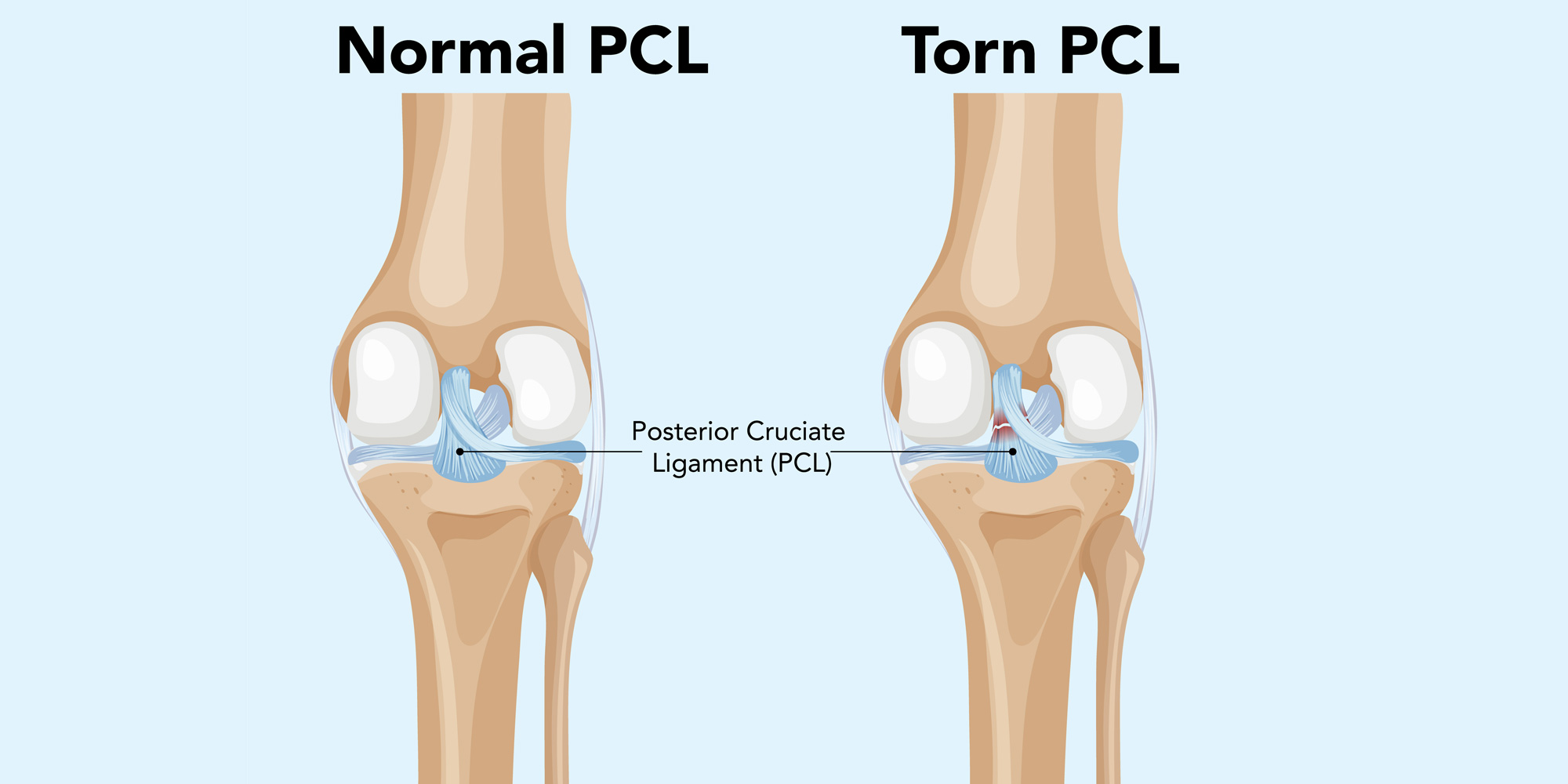
The posterior cruciate ligament (PCL) is one of the strongest ligaments in the knee, running along the back of the joint and connecting the thighbone (femur) to the shinbone (tibia). Its job is to prevent the shinbone from sliding too far backward beneath the thighbone, giving the knee stability during activities like walking down stairs, squatting, decelerating, and absorbing sudden impact.
Because the PCL is so robust, it takes considerable force to injure — which is exactly why PCL injuries are often more serious than they first appear. They commonly occur from a direct blow to the front of a bent knee, such as striking the dashboard in a road accident, landing awkwardly on a flexed knee during sport, or falling hard onto the front of the shin. Contact sports like football, rugby, and motorcycling accidents are among the most frequent causes seen in clinic.
Unlike ACL tears, which usually announce themselves with a dramatic pop and immediate swelling, PCL injuries can be deceptively quiet. Many patients experience mild-to-moderate pain, some swelling, and stiffness — symptoms that can be mistaken for a simple sprain. This is precisely why PCL injuries are among the most commonly missed knee ligament injuries, and why an experienced clinical eye is so important. Left undiagnosed, a PCL tear can gradually cause the knee to feel loose or unstable, particularly on uneven ground or stairs, and over time this instability accelerates wear on the cartilage, increasing the risk of early arthritis.
Recognizing a PCL Injury
Symptoms of a PCL injury vary depending on severity, but commonly include:
- Pain at the back of the knee, particularly with kneeling or squatting
- Swelling that develops within a few hours of injury
- Stiffness and a reduced range of motion
- A sense of mild instability, especially when walking downhill, descending stairs, or decelerating quickly
- Difficulty putting full weight on the affected leg immediately after injury
Because these symptoms are often milder than other ligament injuries, many patients don’t seek evaluation right away — sometimes waiting weeks or months, by which point secondary damage to cartilage or other ligaments may have already begun. If you’ve had a knee injury involving a direct impact to the front of the shin, even if the pain seems manageable, it’s worth getting it checked.
How We Diagnose PCL Injuries
An accurate diagnosis starts with a detailed clinical history — how the injury happened often gives strong clues about which structures are involved. This is followed by a focused physical examination, including specific stress tests such as the posterior drawer test, which assesses how far the shinbone shifts backward relative to the thighbone.
Because PCL tears are graded by severity — from Grade I (mild stretching) to Grade III (complete rupture) — imaging plays a central role in confirming the diagnosis and guiding treatment:
- X-rays rule out associated fractures and assess bone alignment
- MRI scans provide a detailed view of the ligament itself, along with any associated injury to the meniscus, cartilage, or other ligaments (PCL injuries frequently occur alongside damage to the ACL, MCL, or posterolateral corner structures)
This combination allows Dr. Saxena to determine not just whether the PCL is torn, but how severely, and whether other structures need to be addressed at the same time.
Treatment Options
Treatment for a PCL injury depends heavily on the grade of the tear, whether other structures are involved, and the patient’s activity level and goals.
Surgical Reconstruction
Surgery is generally considered for:
- Complete (Grade III) PCL tears
- Injuries involving multiple ligaments (multi-ligament knee injuries)
- Persistent instability despite adequate rehabilitation
- Active patients and athletes who need a high level of knee stability to return to sport
When surgery is needed, Dr. Saxena performs arthroscopic PCL reconstruction, using minimally invasive, keyhole techniques to rebuild the torn ligament with a graft — either from the patient’s own tissue or donor tissue, depending on the case. Arthroscopic reconstruction offers several advantages over traditional open surgery: smaller incisions, less post-operative pain, reduced risk of infection, and a more precise, anatomically accurate reconstruction that closely restores the knee’s natural biomechanics.
Non-Surgical Management
Many isolated Grade I and Grade II PCL injuries respond well to conservative treatment, which typically includes:
- A structured physiotherapy program to restore range of motion and rebuild the quadriceps muscle, which helps compensate for PCL laxity
- Bracing to support the knee and limit backward shifting of the shinbone during early healing
- Activity modification to avoid positions that stress the healing ligament, such as deep squatting or kneeling
- Gradual, progressive return to activity as strength and stability improve
Because the PCL has a relatively good blood supply compared to the ACL, mild-to-moderate injuries often heal reasonably well with a disciplined rehabilitation program, especially when there’s no associated damage to other ligaments.
Recovery and Rehabilitation
Surgery is only the midpoint of an ACL recovery journey — rehabilitation is what determines the ultimate outcome. At Jaipur Sports Doc, every ACL reconstruction is paired with a structured, phase-wise rehabilitation program:
- Early phase — Controlling swelling, restoring range of motion, and protecting the healing graft
- Strengthening phase — Progressive loading of the quadriceps, hamstrings, and surrounding muscles
- Neuromuscular retraining — Rebuilding balance, coordination, and control for dynamic movement
- Sport-specific phase — Running, cutting, and jumping drills tailored to the patient’s sport, introduced only once strength and control benchmarks are met
Full return to competitive sport typically takes several months, and Dr. Saxena’s approach prioritizes readiness over rushed timelines — because returning too early is one of the most common causes of re-injury.
Why Choose Dr. Abhishek Saxena for PCL Treatment
PCL injuries require a level of diagnostic care and treatment nuance that’s often missed elsewhere, given how frequently they’re underestimated. Dr. Abhishek Saxena brings focused sports orthopaedic expertise to every PCL evaluation — combining detailed clinical assessment, advanced imaging, and, where needed, precise arthroscopic reconstruction, all built around a rehabilitation plan tailored to your specific injury and goals.
If you’ve had a knee injury involving impact to the front of the shin, or you’re experiencing ongoing instability that hasn’t fully resolved, don’t dismiss it as “just a sprain.”
“Just a Sprain” Is the Most Dangerous Thing You Can Call a PCL Injury
PCL tears can feel deceptively mild, but untreated injuries may lead to chronic instability and early arthritis. If your knee took a direct blow to the shin or still doesn’t feel stable, get it properly evaluated.