
ACL Injury
Our Expertise
Shoulder Injuries
Recurrent Shoulder dislocation
Rotator Cuff Tear
Injuries around Shoulder
Slap Tears
Knee Injuries
ACL Injury
PCL Injury
Meniscus Injury
MPFL/MCL/LCL Injury
Cartilage Injury
Sport Injuries
ATFL Tear
Tennis Elbow
Golfer Elbow
Hip Labrel Tear
Treatment and Procedures
Shoulder Arthroscopy
Shoulder Replacement
Knee Arthroscopy
Knee Replacement
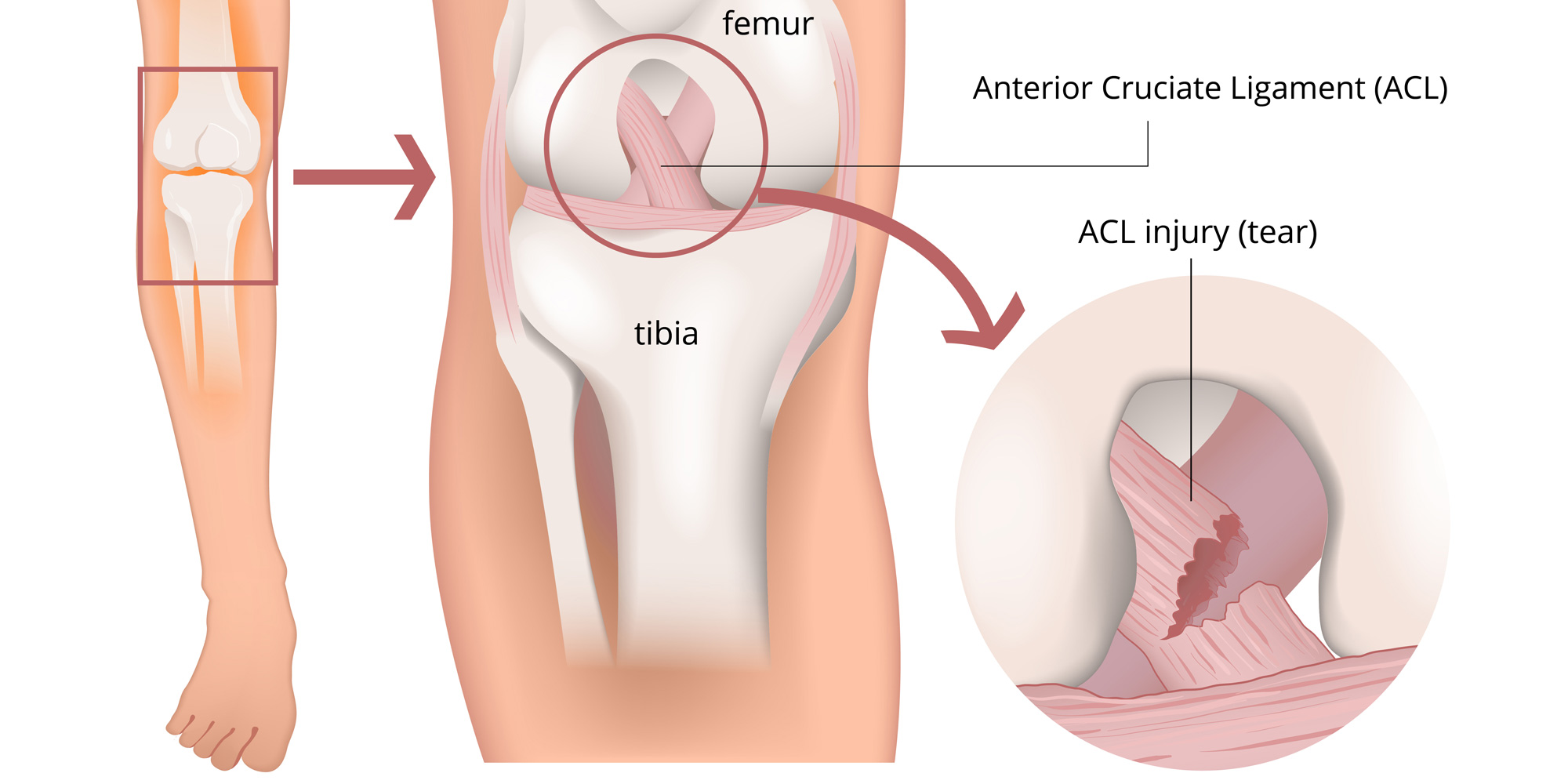
The anterior cruciate ligament, or ACL, is one of the four main ligaments that keep the knee stable. It runs diagonally through the middle of the joint, controlling forward movement of the shinbone and preventing the knee from twisting or buckling under pressure. Because it plays such a central role in stability during pivoting, jumping, and sudden direction changes, the ACL is also one of the most frequently injured ligaments in sport — and one of the most disruptive injuries an active person can face.
An ACL tear can be partial or complete, and both types can significantly affect confidence and function in the knee. Whether it happens on the football field, the badminton court, or during a simple misstep while running, the injury often shares a recognizable pattern: a sudden twist or awkward landing, an audible “pop,” and a knee that swells and feels unstable within hours.
How ACL Injuries Happen
Most ACL tears are non-contact injuries — they don’t require a collision. Instead, they typically occur when the foot is planted and the body suddenly changes direction, decelerates rapidly, or lands off-balance from a jump. Sports with frequent cutting, pivoting, and jumping — football, basketball, badminton, kabaddi, and skiing — carry a particularly high risk. Direct trauma, such as a tackle or a fall, can also tear the ACL, sometimes alongside damage to the meniscus or other ligaments.
Recognizing the Symptoms
An ACL injury usually announces itself clearly, though the intensity can vary:
- A loud pop or snapping sensation at the moment of injury
- Rapid swelling within the first few hours
- Significant pain, especially with weight-bearing
- A feeling that the knee is loose, unstable, or about to “give way”
- Loss of full range of motion
- Difficulty continuing the activity immediately after the injury
Some patients — particularly those with partial tears — experience milder symptoms and may even continue playing before instability becomes apparent later. This is precisely why a proper evaluation matters, even when symptoms seem to settle down after the initial swelling subsides.
Diagnosis: Getting It Right the First Time
An accurate diagnosis is the single most important step in ACL treatment, because it determines every decision that follows. At Jaipur Sports Doc, evaluation of a suspected ACL injury includes:
Treatment
Most cases are managed without surgery: physiotherapy to maintain and gradually improve range of motion, anti-inflammatory medication, and corticosteroid injections, which can be particularly effective earlier in the freezing stage. Procedures such as hydrodilatation (a controlled fluid injection to stretch the tightened capsule) can help in select cases. Surgery — typically arthroscopic capsular release — is reserved for patients whose stiffness doesn’t sufficiently improve with conservative treatment over an adequate trial period.
Functional Assessment
Beyond the ligament itself, understanding a patient’s activity level, sporting goals, and lifestyle demands is key to recommending the right treatment path — because the “right” answer for a competitive athlete may differ from the right answer for someone who wants to walk and cycle comfortably.
MRI Imaging
While X-rays can rule out fractures, an MRI is essential to visualize the ACL itself, confirm the degree of the tear, and identify any accompanying meniscus or cartilage damage that might otherwise go unnoticed.
Treatment Options
Not every ACL tear requires surgery, and the treatment plan is always built around the individual — the severity of the tear, the stability of the knee, associated injuries, age, and activity goals.
Surgical Reconstruction
For complete tears, high-demand athletes, or patients experiencing persistent instability, ACL reconstruction is often the most reliable path back to full function. This is performed arthroscopically — through small keyhole incisions — and involves replacing the torn ligament with a graft, most commonly harvested from the patient’s own hamstring or patellar tendon (autograft), or occasionally from donor tissue (allograft).
The goal of reconstruction isn’t just to repair a torn ligament; it’s to restore the knee’s natural mechanics closely enough that patients can return to cutting, pivoting, and jumping sports with confidence and a significantly lower risk of re-injury.
Non-Surgical Management
For partial tears, low-demand patients, or those willing to modify their activity level, a structured non-surgical program can be effective. This typically includes:
- Progressive physiotherapy to rebuild strength in the quadriceps and hamstrings, which help compensate for ligament laxity
- Neuromuscular and balance training to restore proprioception and reduce the risk of the knee giving way
- Functional bracing for added stability during activity
- Gradual return to activity, closely monitored for signs of ongoing instability
Life After ACL Surgery: Rehabilitation
Surgery is only the midpoint of an ACL recovery journey — rehabilitation is what determines the ultimate outcome. At Jaipur Sports Doc, every ACL reconstruction is paired with a structured, phase-wise rehabilitation program:
- Early phase — Controlling swelling, restoring range of motion, and protecting the healing graft
- Strengthening phase — Progressive loading of the quadriceps, hamstrings, and surrounding muscles
- Neuromuscular retraining — Rebuilding balance, coordination, and control for dynamic movement
- Sport-specific phase — Running, cutting, and jumping drills tailored to the patient’s sport, introduced only once strength and control benchmarks are met
Full return to competitive sport typically takes several months, and Dr. Saxena’s approach prioritizes readiness over rushed timelines — because returning too early is one of the most common causes of re-injury.
Why Choose Dr. Abhishek Saxena for Your ACL Injury
Dr. Saxena brings focused, sports-orthopaedic expertise to ACL diagnosis and treatment — not a generalist approach, but one shaped by years of experience with athletes and active individuals across Jaipur. Every case begins with an honest conversation about what’s actually needed: when rehabilitation alone is enough, and when reconstruction is the better path to lasting stability. Patients are supported through every stage, from the first scan to the final return-to-sport clearance, with clear communication throughout.
Don’t Let an ACL Tear Sideline You for Longer Than It Should
An untreated or poorly managed ACL injury doesn’t just limit sport — it raises the risk of further meniscus tears, cartilage damage, and early arthritis. The sooner it’s properly assessed, the better your options.