
SLAP Tear Treatment
Our Expertise
Shoulder Injuries
Recurrent Shoulder dislocation
Rotator Cuff Tear
Injuries around Shoulder
Slap Tears
Knee Injuries
ACL Injury
PCL Injury
Meniscus Injury
MPFL/MCL/LCL Injury
Cartilage Injury
Sport Injuries
ATFL Tear
Tennis Elbow
Golfer Elbow
Hip Labrel Tear
Treatment and Procedures
Shoulder Arthroscopy
Shoulder Replacement
Knee Arthroscopy
Knee Replacement
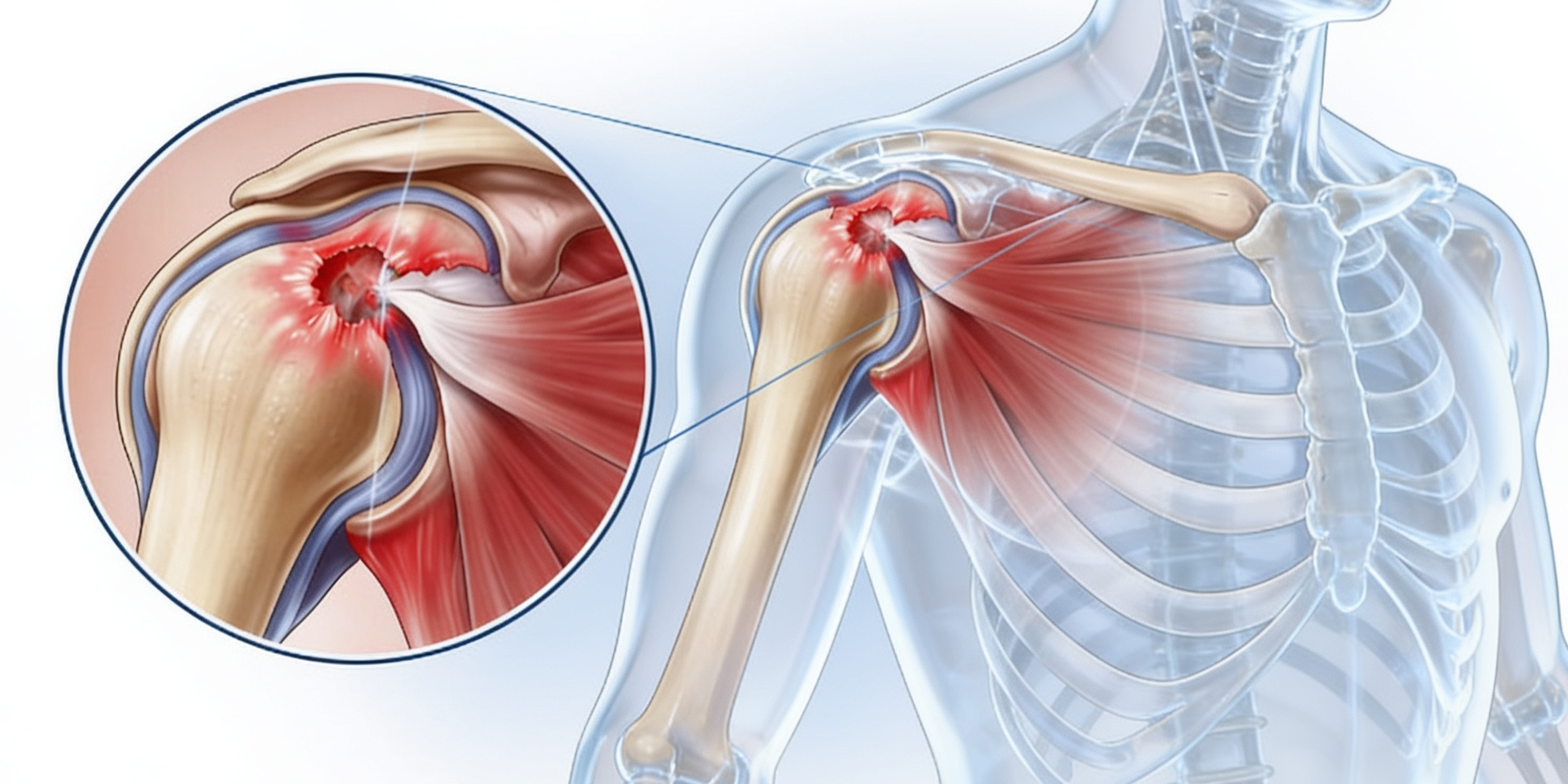
SLAP stands for Superior Labrum Anterior to Posterior — a tear in the ring of cartilage (labrum) at the top of the shoulder socket, specifically where the biceps tendon attaches. It’s one of the more commonly misdiagnosed shoulder injuries, because the pain sits deep in the joint, symptoms overlap with other shoulder conditions, and a standard MRI can miss it without contrast. Dr. Abhishek Saxena, fellowship-trained in shoulder arthroscopy and sports medicine, evaluates SLAP tears with the clinical depth they require — and builds treatment plans around your specific tear type, age, and activity goals.
Understanding SLAP Tears
The labrum is a ring of fibrocartilage that lines the rim of the shoulder socket, deepening the socket and helping hold the arm bone in place. At the very top of this ring — the superior labrum — the long head of the biceps tendon anchors into the bone. A SLAP tear damages this attachment point, disrupting both the labrum’s role in stabilizing the joint and the biceps tendon’s anchor.
SLAP tears are classified into four main types based on severity:
Type IV
The tear extends from the labrum into the biceps tendon itself, the most complex type and most likely to need surgical intervention including biceps tenodesis.
Type III
A “bucket-handle” tear where a flap of labrum folds into the joint, causing locking or catching sensations, while the biceps anchor remains intact.
Type II
The most common type. The labrum and biceps anchor are partially or fully detached from the bone, causing instability and symptoms. Most likely to require surgical repair.
Type I
The labrum is frayed at the edges but still attached; the biceps anchor is intact. Common with age-related degeneration, often requiring no surgery.
What Causes SLAP Tears
Previous shoulder injury
Dislocation or rotator cuff damage can place additional stress on the biceps anchor and labrum
Age-related degeneration
The superior labrum naturally frays with age; Type I tears in particular are a common incidental finding in patients over 40
Repetitive overhead occupational activity
painters, construction workers, and others performing sustained overhead tasks can develop gradual labral wear
Sudden traction force
A sharp pull on the arm, such as catching a heavy falling object or bracing a fall, can tear the biceps tendon’s labral attachment
Fall onto an outstretched arm
A sudden impact that jams the arm bone upward into the socket, pinching and tearing the labrum at the top
Throwing or overhead sports
Repeated high-speed shoulder rotation in cricket, baseball, volleyball, badminton, and swimming gradually stresses the superior labrum and biceps anchor over time; the most common mechanism in athletic patients
Signs of a SLAP Tear
A note on diagnosis difficulty SLAP tear symptoms can closely mimic shoulder impingement, rotator cuff pathology, and biceps tendinopathy — which is why a proper clinical evaluation matters more here than with most shoulder injuries.
Common symptoms:
- Deep shoulder pain, often difficult to pinpoint — described as being “inside” the joint rather than on the surface
- Pain with overhead activity, reaching across the body, or the follow-through of a throw
- A clicking, catching, popping, or grinding sensation within the joint during movement
- A feeling of instability or that the shoulder isn’t performing as expected — especially at the top of a throwing motion
- Weakness with overhead or rotational movements
- Pain at the front of the shoulder if the biceps tendon is involved — sometimes radiating down the upper arm
- Symptoms that come and go, or that worsen with specific sports activities but aren’t constant
Treatment for SLAP Tears
Biceps tenodesis
A “bucket-handle” tear where a flap of labrum folds into the joint, causing locking or catching sensations, while the biceps anchor remains intact.
Arthroscopic SLAP repair (labrum reattachment)
For active patients under 40, athletes, and those with significant Type II or Type III tears where conservative treatment hasn’t worked, arthroscopic repair is typically the preferred surgical approach. The torn labrum is reattached to the glenoid bone using small suture anchors through keyhole incisions — restoring the natural biceps anchor and labral bumper without the scarring and recovery of open surgery.
Non-surgical treatment
Many SLAP tears, particularly Type I fraying and small, stable Type II tears — especially in less active or older patients — can be managed without surgery. A structured program of rest, activity modification, anti-inflammatory medication, and targeted physiotherapy to strengthen the rotator cuff and scapular stabilizers can meaningfully reduce symptoms and improve function, even when the tear itself doesn’t fully heal.
The right surgical choice — repair versus tenodesis — depends on the tear type, the condition of the biceps anchor, and the patient’s age and activity demands, which is exactly why these findings need to be properly evaluated before a surgical plan is made.
Recovery After SLAP Tear Surgery
Whether labrum repair or biceps tenodesis is performed, recovery follows a similar protected timeline. A sling is worn for several weeks to protect the repair from biceps loading, followed by staged physiotherapy beginning with passive range of motion, progressing to active movement, then rotator cuff and scapular strengthening, and finally sport-specific training and return to throwing or overhead activity. Most patients return to daily activities within 6–8 weeks and to overhead sport in the range of 4 to 6 months, though throwing athletes — particularly those returning to high-velocity sports — may require up to 6–9 months of structured progression before full return to competition.
FAQ
How is a SLAP tear different from a rotator cuff tear?
They affect different structures — a SLAP tear damages the labrum and biceps tendon anchor at the top of the shoulder socket, while a rotator cuff tear affects the tendons wrapping around the outside of the joint. Both can cause shoulder pain and weakness, and they frequently co-occur, which is why a thorough evaluation — not just imaging — is needed to identify exactly what’s involved.
Can a SLAP tear heal without surgery?
Some can — particularly Type I fraying and stable smaller tears, especially in less active or older patients, where physiotherapy to strengthen the surrounding muscles can manage symptoms well enough for full function. Significant Type II tears in athletes and younger, active patients are less likely to settle fully without surgery.
Why is an MRI arthrogram better than a regular MRI for SLAP tears?
The labrum is a thin, curved structure that can be difficult to visualise clearly on a standard MRI. Injecting contrast directly into the joint before the scan (arthrogram) makes the labral surfaces much more visible and significantly improves diagnostic accuracy — particularly for partial tears that could easily be missed on a standard study.
What is biceps tenodesis and when is it used instead of labrum repair?
Biceps tenodesis reattaches the biceps tendon to a new anchor point on the upper arm bone, removing the tension on the damaged labral attachment. It’s generally preferred for patients over 40, those with significant biceps tendon involvement (Type IV tears), or where the labral tissue is too worn to hold a reliable repair. It consistently achieves good outcomes in the right patient group.
How long before I can return to throwing or overhead sport?
Most athletes return to sport-specific training around 4 to 6 months, with full return to high-velocity throwing or overhead competition often taking up to 6 to 9 months depending on the specific repair, rehabilitation progress, and the demands of the sport.
Are SLAP tears common in non-athletes?
Yes — while overhead athletes are the most commonly affected group, SLAP tears also occur from falls, sudden traction injuries, and age-related wear. Active adults who aren’t competitive athletes but regularly train, swim, or play recreational sport are frequently affected.
Persistent Deep Shoulder Pain Deserves a Proper Diagnosis
SLAP tears are commonly missed on initial assessment. If your shoulder pain hasn’t responded to physiotherapy, or if you’re an athlete noticing something is off in your throwing motion, get it properly evaluated.